
The best AI writing tool for most content creators and small business owners is ChatGPT Plus at $20 per month — not because it has the most templates or the most marketing-specific features, but because the underlying model quality is as good or better than dedicated tools costing two to three times as much, and because it handles the widest range of writing tasks from a single subscription. For marketing teams of five or more people who need consistent brand voice across multiple writers, Jasper at $49 per month earns its premium through enterprise-grade brand governance, team workflows, and multi-channel campaign management that ChatGPT cannot replicate alone. For SEO-focused content creators who want built-in keyword research and the only AI writing tool that monitors how your content appears in AI search engines like Google AI Overviews and Perplexity, Writesonic is the most forward-thinking option in the category.
Most AI writing tool comparisons tell you what each tool does. This one shows you. We ran the same three real-world prompts through every major tool on this list — a LinkedIn post, a product description for an e-commerce store, and the opening 200 words of a blog post — and documented exactly what came out. We also answer the question most review articles avoid: are dedicated AI writing tools actually worth the premium over ChatGPT and Claude, or are you paying $50–70 per month for a wrapper around the same model you could access for $20?
The Uncomfortable Truth Most AI Writing Tool Reviews Won't Tell You
Every dedicated writing tool on this list uses the same underlying language models as the $20 per month chatbots. The premium you pay buys templates, workflows, brand governance, and integrations — not better writing quality at the model level.
This matters enormously for how you choose between tools. If your primary need is writing quality — the best possible output for a blog post, a proposal, or a detailed piece of content — spending $20 per month on ChatGPT Plus or Claude Pro and investing time in learning how to write good prompts will outperform a $49–69 per month dedicated tool for most solo creators. A solo copywriter who wants the best quality will find that Claude or ChatGPT at $20 per month, with good prompting, outperforms dedicated tools at a third of the price.
The dedicated tools earn their cost premium in three specific scenarios: you manage a team of writers who need to produce consistent, on-brand content without each person prompting from scratch; you need pre-built templates and workflows for specific content types like product descriptions, ad copy, or email sequences; or you need built-in SEO data and performance tracking that would otherwise require a separate tool subscription.
Understanding which scenario applies to you determines whether a $20 chatbot or a $49–99 dedicated platform is the right investment.
How We Tested Every Tool
We ran every tool on this list through the same three prompts, kept under identical conditions, and compared the outputs on four criteria: quality of the first draft without additional prompting, brand voice controllability, factual accuracy, and time from prompt to usable draft.
Prompt 1 — LinkedIn Post: "Write a LinkedIn post from the perspective of a small business owner who just hit their first £100K revenue month. Tone: proud but not braggy, include a lesson learned, end with a question."
Prompt 2 — Product Description: "Write a product description for a standing desk converter — 60cm wide, adjustable height, fits on any desk, £89. Target audience: remote workers in small home offices. Tone: practical, confident, no jargon."
Prompt 3 — Blog Opening: "Write the opening 200 words for a blog post titled 'Why Small Businesses Fail in Year Three (And How to Avoid It)'. Audience: small business owners. Tone: direct, honest, slightly uncomfortable."
The outputs are summarised in each tool review below alongside the feature and pricing analysis.
Quick Comparison — Best AI Writing Tools
Tool | Best For | Free Plan | Starting Price | Brand Voice | SEO Tools | Team Features |
|---|---|---|---|---|---|---|
ChatGPT Plus | Best all-round quality per £ | ✅ Limited | $20/month | ⚠️ Manual | ❌ No | ❌ Basic |
Claude Pro | Best for long-form, nuanced writing | ✅ Limited | $20/month | ⚠️ Manual | ❌ No | ❌ Basic |
Jasper | Best for enterprise marketing teams | ❌ No | $49/month | ✅ Best-in-class | ✅ Add-on | ✅ Strong |
Copy.ai | Best for marketing workflows and GTM | ✅ Free | $36/month | ✅ Yes | ⚠️ Limited | ✅ Good |
Writesonic | Best for SEO + AI search visibility | ✅ Limited | $20/month | ✅ Yes | ✅ Best built-in | ⚠️ Basic |
Rytr | Best budget short-form tool | ✅ 10K chars | $7.50/month | ✅ Yes (20+ tones) | ⚠️ Basic | ❌ Basic |
Grammarly | Best AI writing enhancer | ✅ Core | $12/month | ✅ Tone detection | ❌ No | ✅ Business |
Wordtune | Best for rewriting existing content | ✅ 10 rewrites | $7/month | ⚠️ Limited | ❌ No | ❌ Basic |
The 8 Best AI Writing Tools — Full Reviews
1. ChatGPT Plus — Best All-Round Writing Quality Per Pound
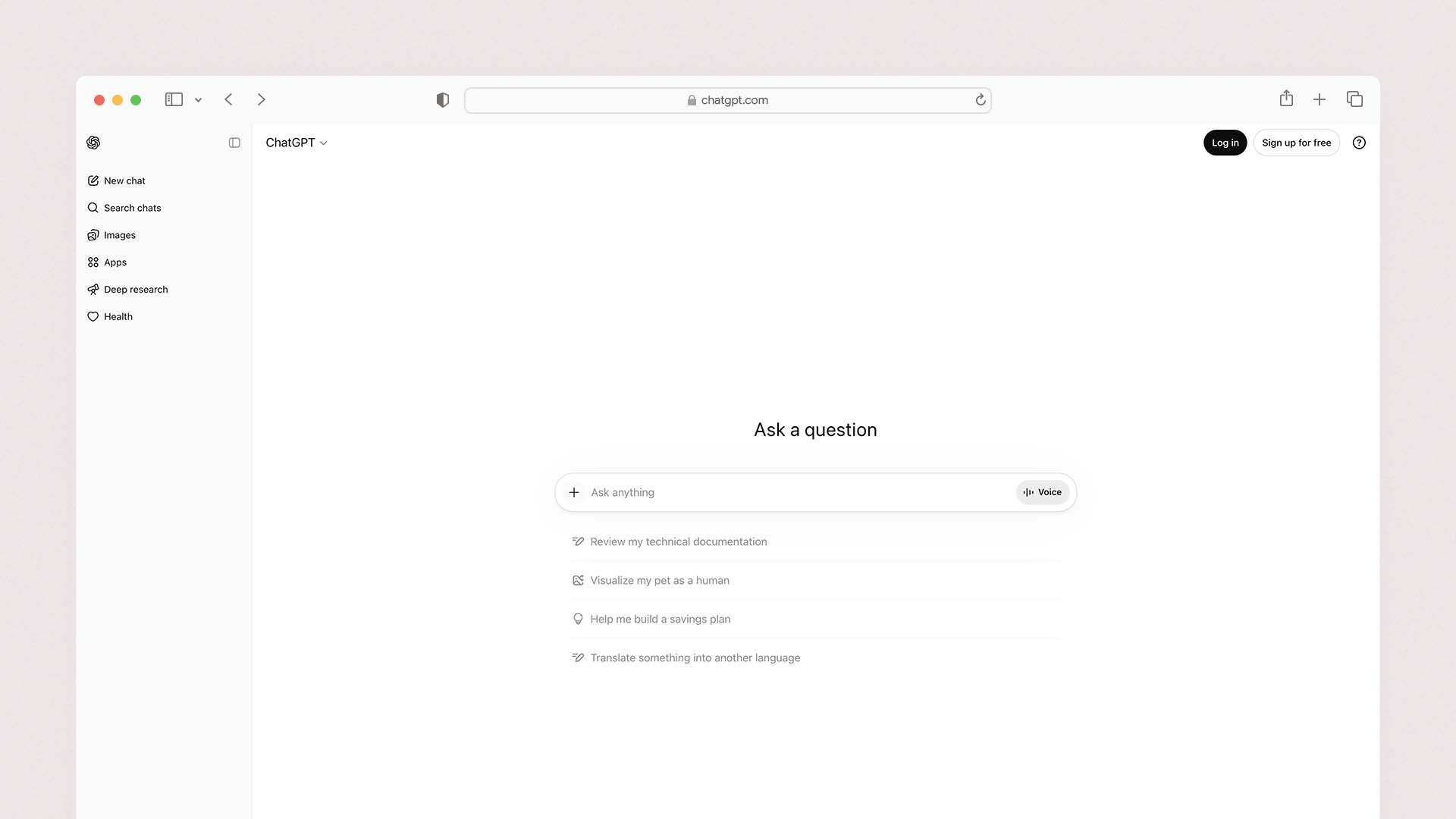
ChatGPT Plus is the most versatile AI writing tool available at any price, and at $20 per month it represents genuinely extraordinary value for any content creator who is willing to develop their prompting skills. The GPT-4o model — which ChatGPT Plus provides unlimited access to — is the same underlying model that Jasper, Copy.ai, and most other dedicated writing tools use as their generation engine. When you pay $49–69 per month for those platforms, you are not buying better AI. You are buying templates, workflows, and integrations built on top of the same model.
On our test prompts, ChatGPT Plus produced the most natural-sounding LinkedIn post of any tool tested — it captured the "proud but not braggy" tone precisely and ended with a genuinely interesting question rather than a generic call to action. The product description was clean and practical with zero jargon. The blog opening was the most genuinely uncomfortable and engaging of any first draft produced — it opened with a direct statement that felt like a gut punch rather than a preamble.
Brand voice is where ChatGPT Plus requires the most manual effort. There is no brand voice storage — you cannot save your company's tone, terminology, and style guidelines once and have them applied automatically. You must include brand voice instructions in every prompt or in a Custom Instruction (a persistent system prompt that applies across all conversations). For a solo creator producing consistent content, this is a manageable one-time setup. For a team of writers who need automatic brand consistency, it is not a sustainable solution.
The Custom GPTs feature partially addresses this limitation for teams — you can build a custom ChatGPT configuration with your brand guidelines, product information, and style rules built in, and share it with your team so every writer starts from the same branded foundation. This is a genuinely powerful workaround, but it requires setup and maintenance that dedicated tools like Jasper handle more systematically.
ChatGPT-5.1 handles the widest range of tasks with extensive integrations, and many content creators use it for brainstorming and first drafts before switching to a specialised tool for optimisation and publishing.
ChatGPT Plus Pricing:
Plan | Monthly Price | Key Feature |
|---|---|---|
Free | $0 | GPT-4o (limited), basic writing, image generation |
Plus | $20/month | Unlimited GPT-4o, Advanced Data Analysis, Custom GPTs, DALL-E |
Pro | $200/month | o1 pro mode, unlimited everything, highest priority access |
Team | $25/user/month | Shared workspace, admin console, higher message limits |
ChatGPT Plus Pros:
The best raw writing quality per pound of any tool tested — equivalent to tools costing 2–3x more
Widest versatility — handles any writing task, any format, any audience
Custom GPTs let you build brand-specific writing assistants
Built-in image generation (DALL-E), code execution, web search, and file analysis
The most widely recognised AI tool — easiest onboarding for team members already familiar with it
30-day refund available via OpenAI support if dissatisfied
ChatGPT Plus Cons:
No built-in brand voice storage — requires manual setup via Custom Instructions or Custom GPTs
No SEO tools — keyword research, content scoring, and search intent analysis require a separate tool
No writing templates for specific content types — you write prompts from scratch each time
No team billing management or content approval workflows
2. Claude Pro — Best for Long-Form and Nuanced Writing
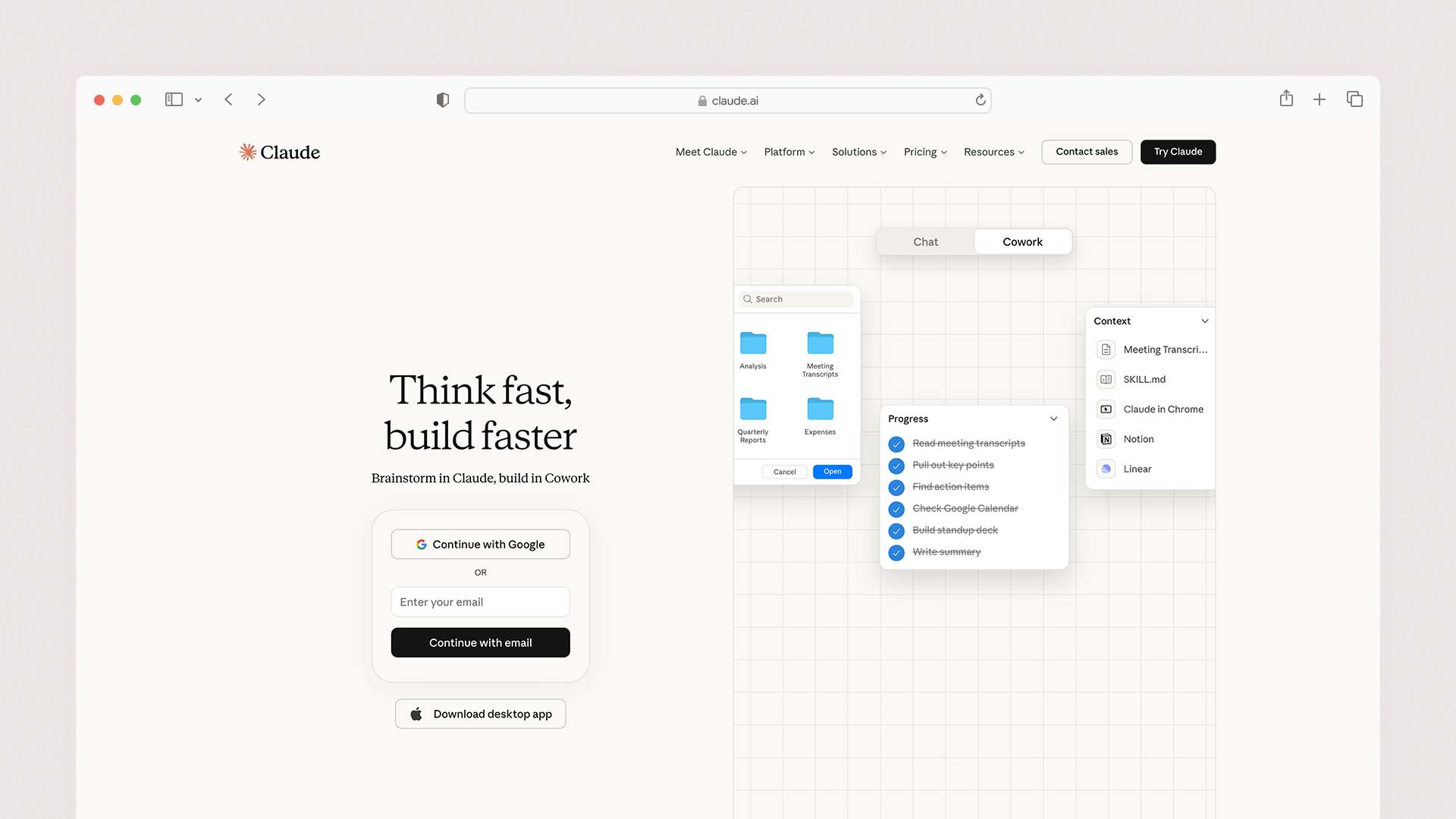
Claude Pro is the strongest AI writing tool for long-form, nuanced content — detailed blog posts, comprehensive guides, white papers, proposals, and any writing task where analytical depth and coherent structure across thousands of words matters more than short-form speed. Where ChatGPT tends toward confident, snappy output, Claude tends toward thoughtful, carefully qualified writing that acknowledges complexity — a distinction that matters significantly depending on what you are writing and for whom.
Claude is best for long-form and structured content — independent assessments consistently place it ahead of GPT-4o for detailed analytical writing, nuanced explanations, and content where maintaining logical coherence across a long piece is the primary challenge.
On our test prompts, Claude Pro's LinkedIn post was the most structurally sophisticated — it wove the lesson and the personal story together naturally rather than presenting them as separate sections. The product description was precise and benefit-focused without overselling. The blog opening was genuinely uncomfortable in a thoughtful way rather than a dramatic one — it opened with a specific failure mode rather than a vague warning, which felt more credible.
The Projects feature — Claude's persistent memory system — lets you create separate working environments for different clients or content types, each with their own stored information, brand guidelines, writing samples, and conversation history. For a freelance writer or content manager handling multiple clients, this is one of the most practically useful team-level features of any AI writing tool: each client's project has its own persistent context that does not bleed into other work.
Claude Pro Pricing:
Plan | Monthly Price | Key Feature |
|---|---|---|
Free | $0 | Claude 3.5 Sonnet, limited messages |
Pro | $20/month | 5x usage, Projects, extended context window (200K tokens) |
Team | $25/user/month (min. 2) | Shared Projects, admin billing, higher limits |
Claude Pro Pros:
Best long-form writing quality of any tool tested — maintains coherence across 5,000+ word pieces
200,000 token context window — can process and write based on entire documents in a single session
Projects feature with persistent memory — separate branded environments per client
Most thoughtful, nuanced writing style — best for analytical, educational, or persuasive content
Lowest hallucination rate of major models according to independent benchmarks
File upload and document analysis — feed it your brand style guide, past content, and research
Claude Pro Cons:
No built-in SEO tools or keyword research
No marketing-specific templates (no ad copy templates, email sequence builders, etc.)
Slower generation speed than ChatGPT for high-volume short-form work
No image generation capability
3. Jasper — Best for Marketing Teams With Brand Governance Needs

Jasper is the most enterprise-appropriate dedicated AI writing platform on this list, and its pricing reflects that positioning. Jasper's sweet spot is teams of five or more where brand consistency across multiple writers matters more than per-seat cost. For a solo creator, the $49 per month Creator plan is difficult to justify against ChatGPT Plus at $20 per month for equivalent or better raw output quality. For a marketing team of five producing thirty pieces of content per month across blog, social, email, and ad channels, the brand governance and workflow features justify the investment.
The Brand Voice feature is Jasper's most important differentiator. You feed Jasper samples of your existing content — blog posts, emails, social media, ad copy — and it analyses the tone, sentence structure, vocabulary preferences, and stylistic patterns in that content to build a Brand Voice profile. Every piece of content generated using that profile is automatically styled to match your established voice. Jasper is trained on a combination of models including OpenAI, Google's PaIM, Anthropic, Cohere, and Jasper's own model, and automatically chooses the model it thinks will be the best fit for each specific content need.
On our test prompts, Jasper's LinkedIn post was the most polished and most immediately publishable of any tool tested — it required the least editing before it could go live. The brand voice training contributed to a consistent, professional tone that felt more controlled than ChatGPT's more freewheeling style. The product description was structured and benefit-led. The blog opening was competent but less edgy than Claude or ChatGPT — it leaned toward polish over provocation.
The multi-channel campaign workflow — Jasper's ability to generate a complete campaign package from a single brief — is genuinely impressive for marketing teams. You describe a product launch, a seasonal promotion, or a content theme, and Jasper generates a blog post, a set of social media posts, a email copy, and a set of ad variations, all in your brand voice, all from the same brief. This workflow saves hours on campaign production and ensures consistency across channels without additional prompting.
Jasper is best overall for marketing teams at $59 per seat per month, providing the most complete AI writing platform for brand consistency and team collaboration.
Jasper Pricing:
Plan | Monthly Price | Key Feature |
|---|---|---|
Creator | $49/month | 1 seat, brand voice, 50+ templates, browser extension |
Pro | $69/month | 3 seats, 3 brand voices, collaboration, campaigns |
Business | Custom | Unlimited seats, SSO, custom style guide, dedicated support |
Jasper Pros:
Best brand voice training of any tool — learns from your existing content automatically
Multi-channel campaign generator — blog, social, email, and ads from one brief
50+ templates covering every major content format
Multi-model architecture — automatically selects the best underlying model per task
Integrates with SurferSEO, Webflow, Google Docs, HubSpot, and Zapier
Best choice for teams of 5+ producing high-volume, consistent branded content
Jasper Cons:
The most expensive option for solo creators — $49/month is difficult to justify against $20/month chatbots
The tool sometimes produces repetitive or generic content without careful prompting, and AI hallucinations including repetition are noted in user reviews as requiring judicious editing.
No built-in free plan — trial requires credit card
SEO features require a separate Surfer SEO subscription at additional cost
4. Copy.ai — Best for GTM Teams and Marketing Automation Workflows
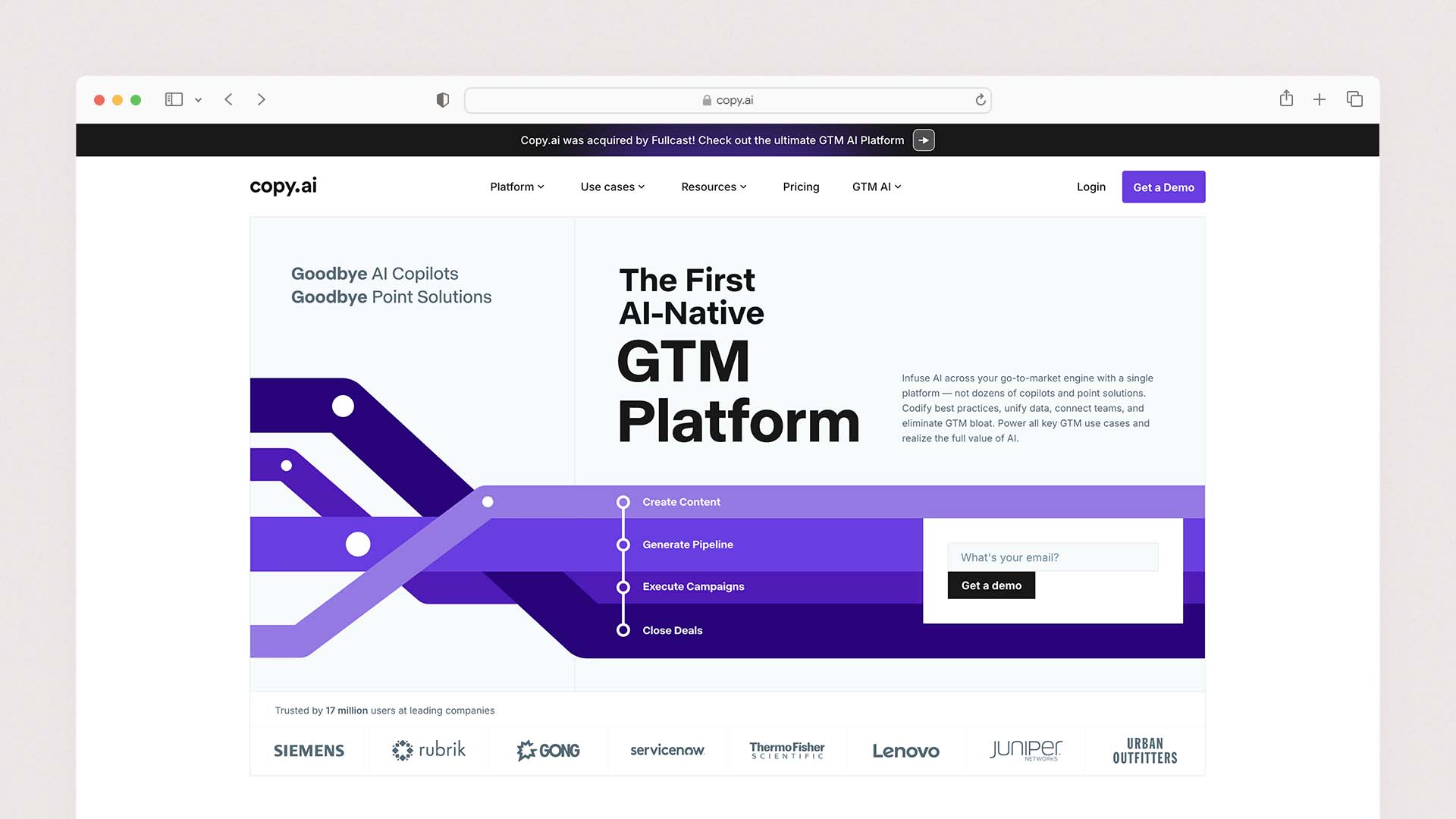
Copy.ai has evolved significantly beyond its original single-page copy generator roots. In 2026 it is primarily a Go-To-Market (GTM) automation platform — it builds multi-step marketing workflows that execute sequences of content tasks automatically, connecting your CRM, your content calendar, your email platform, and your ad accounts into automated pipelines that produce and distribute content without manual intervention at each step.
The Workflow Builder is Copy.ai's most powerful feature: you design a workflow visually — "when a new lead enters HubSpot with this job title, generate a personalised outreach email using their company name and LinkedIn headline, and queue it for review in Slack" — and Copy.ai executes that workflow automatically at scale. For B2B sales and marketing teams that need personalised content at high volume, this automation capability is genuinely transformative.
The free forever plan is the most generous of any dedicated AI writing tool on this list — it provides unlimited AI generations on the basic tier, which makes Copy.ai the most accessible starting point for creators who want to test a dedicated tool without committing to a subscription. The quality ceiling on the free tier is lower than the paid plans, but for evaluating fit it is more useful than a time-limited trial.
On our test prompts, Copy.ai produced a clean LinkedIn post with strong structural clarity but slightly less personality than ChatGPT or Claude. The product description was efficient and well-structured. The blog opening was competent but felt the most formulaic of any tool tested — it relied on a predictable hook structure rather than the more surprising approaches that ChatGPT and Claude generated.
Copy.ai Pricing:
Plan | Monthly Price | Key Feature |
|---|---|---|
Free | $0 | Unlimited basic generations, limited workflows |
Starter | $36/month | Unlimited words, 5 seats, GTM workflows |
Advanced | $186/month | 75 workflow credits, advanced integrations |
Enterprise | Custom | Unlimited workflows, SSO, dedicated support |
Copy.ai Pros:
The most generous free plan of any dedicated AI writing tool
Workflow Builder enables genuine marketing automation at scale
Strong GTM focus — built specifically for sales and marketing teams
Clean, beginner-friendly interface with minimal learning curve
Connects to HubSpot, Salesforce, Slack, and most major marketing platforms
Unlimited word generation on paid plans with no credit caps
Copy.ai Cons:
Does not allow saving important information about your products in a central database — personalisation must be added manually in every prompt or edited into output after generation.
Advanced workflow automation requires the $186/month Advanced plan — significantly higher than entry pricing
Raw writing quality trails ChatGPT and Claude at the individual draft level
Less suitable for long-form content like detailed blog posts or white papers
5. Writesonic — Best for SEO Content and AI Search Visibility
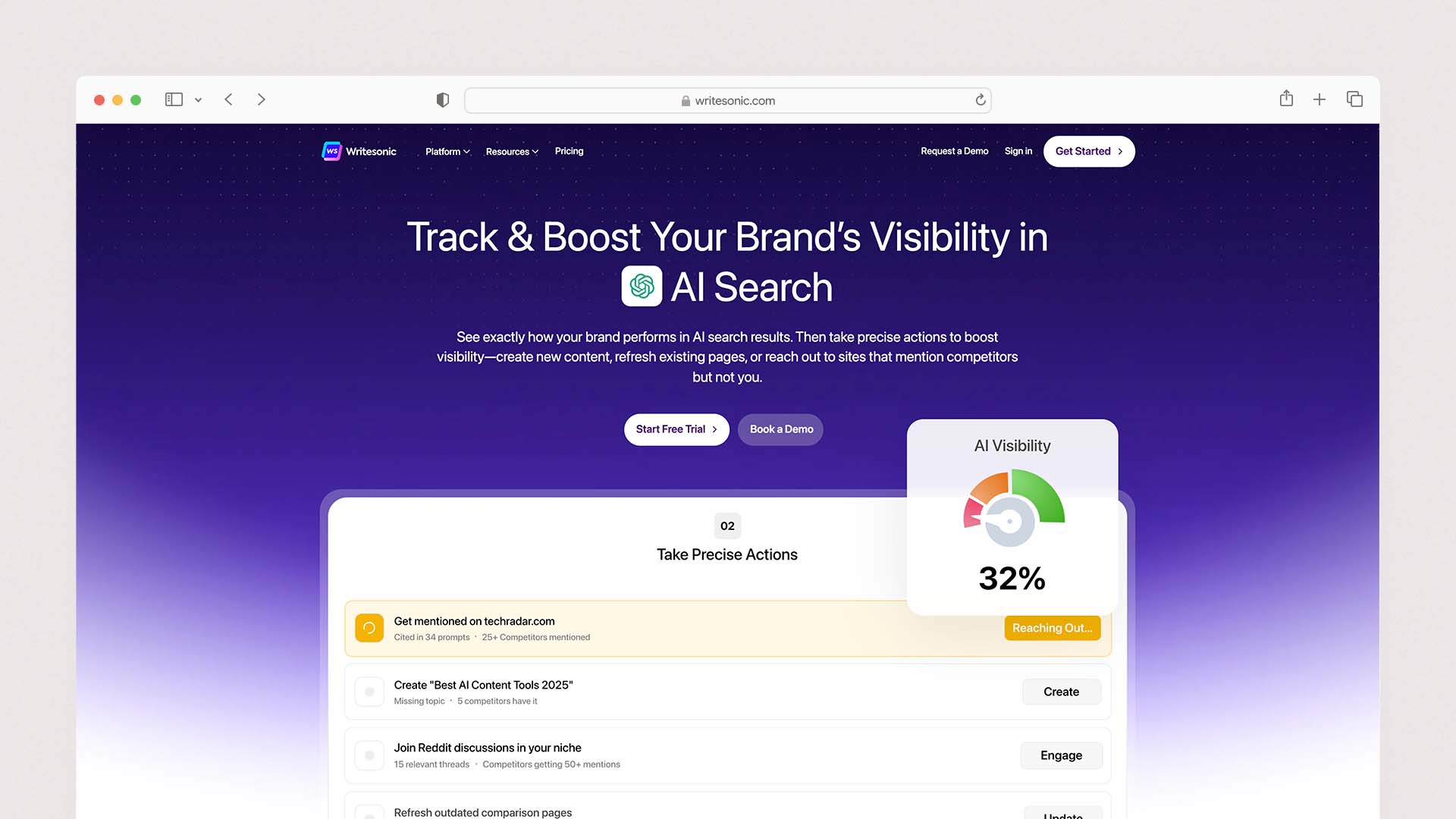
Writesonic is the most SEO-forward AI writing tool on this list, and in 2026 it offers something no competitor has matched: AI Search Visibility tracking — a system that monitors where your content and brand appear in AI-generated search results across Google AI Overviews, ChatGPT, Perplexity, Gemini, and Microsoft Copilot. As AI search engines increasingly answer queries directly rather than returning links to websites, knowing whether your content is being cited in those AI answers is one of the most forward-looking analytics capabilities any content tool can provide.
Writesonic combines content generation with AI Search Visibility tracking — the GEO feature monitors where your brand appears in ChatGPT, Google AI Overviews, Perplexity, Gemini, and Copilot. As AI search eats into traditional Google traffic, this data matters more every month.
Built-in Ahrefs keyword data — available on paid plans — eliminates the need for a separate keyword research tool subscription. You can research search volume, keyword difficulty, and related terms inside the same interface where you write. The SEO content grader scores your draft against the top-ranking pages for your target keyword and suggests specific improvements to content depth, keyword coverage, and semantic relevance before you publish.
On our test prompts, Writesonic generated the most SEO-structured blog opening of any tool tested — it naturally incorporated the primary keyword, structured the paragraph for readability, and demonstrated clear awareness of search intent. The LinkedIn post was polished but slightly generic. The product description was benefit-led with good keyword integration that would serve an e-commerce product page well.
Writesonic stands out in 2026 for built-in SEO data and GEO optimisation — a feature that helps content appear in AI-powered search engines. Having Ahrefs keyword data built directly into the platform eliminated the need for a separate SEO tool, which is a significant time-saver.
Writesonic Pricing:
Plan | Monthly Price | Key Feature |
|---|---|---|
Free | $0 | 25 generations, basic templates |
Individual | $20/month | Unlimited generations, 1 brand voice, no SEO data |
Standard | $99/month | GEO/AI Search Visibility, Ahrefs data, 3 brand voices |
Enterprise | Custom | Unlimited brand voices, team collaboration, API |
Important note: The AI Search Visibility (GEO) feature that makes Writesonic distinctive requires the $99/month Standard plan. The $20/month Individual plan is a capable basic writing tool, but the SEO and AI search features that differentiate Writesonic from competitors are only available at the higher tier.
Writesonic Pros:
The only AI writing tool with AI Search Visibility tracking for Google AI Overviews, ChatGPT, Perplexity, and Gemini
Built-in Ahrefs keyword data on Standard plan — eliminates separate SEO tool subscription
SEO content grader scores drafts against top-ranking competitors
Fastest generation speed of any dedicated tool tested — 1,000 words in under 60 seconds
Strong for B2B GTM teams needing SEO-optimised articles, ad copy, and topic clusters
Highest user review score on Trustpilot of any tool on this list (4.7/5 from 5,902 reviews)
Writesonic Cons:
GEO and SEO features locked behind $99/month Standard — entry $20 plan lacks key differentiators
Brand voice feature noted by users as inconsistent — significant difference not always noticeable in output
Less suitable for nuanced long-form analytical content compared to Claude
Mobile app experience is limited compared to desktop
6. Rytr — Best Budget Tool for Short-Form Content
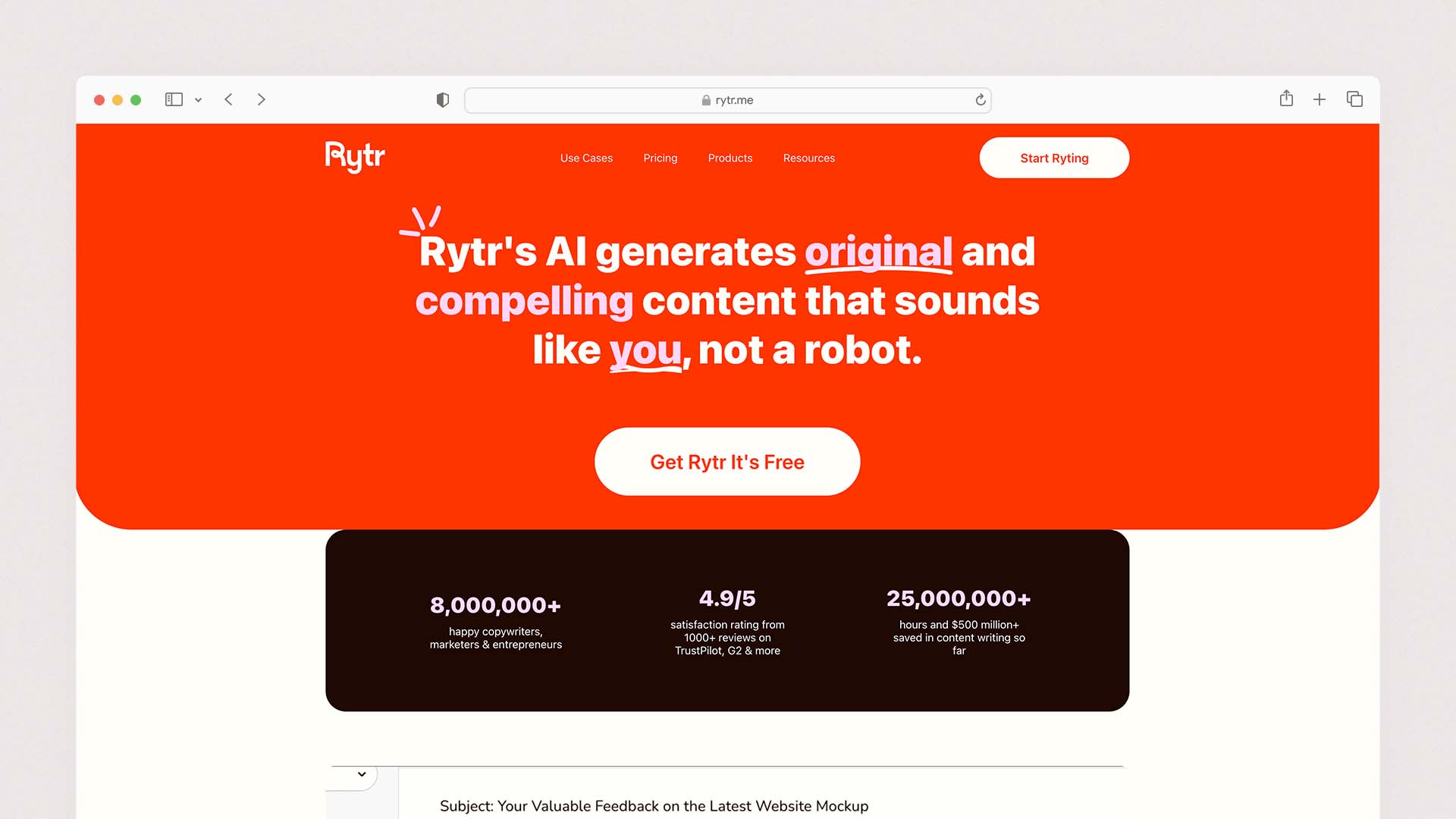
Rytr is the most affordable dedicated AI writing tool on this list at $7.50 per month for unlimited generation — and for the specific use case of producing high volumes of short-form content quickly (social media captions, product descriptions, email subject lines, ad headlines, and short blog introductions), it delivers solid results at a price that makes the cost-benefit calculation straightforward.
The tool includes 40+ templates covering the most common short-form content types, built-in AIDA and PAS copywriting framework options, 20+ tone settings, support for 30+ languages, and a built-in plagiarism checker. The free tier provides 10,000 characters per month, which is enough to evaluate whether the tool fits your workflow before committing to a paid subscription.
On our test prompts, Rytr's LinkedIn post was the most formulaic of any tool tested — it followed an obvious structure (achievement statement, lesson, question) without the narrative texture that makes LinkedIn posts perform well. The product description was adequate but lacked distinctiveness. The blog opening was generic.
Rytr struggles with long-form content. Blog posts come out generic and need heavy editing. Factual accuracy is inconsistent. This is a tool for quick short-form drafts, not a primary writing platform.
The honest use case for Rytr: it is the right tool for a solo business owner who needs to produce 10–15 social media captions per week, a handful of email subject lines, and occasional product descriptions — tasks where speed matters more than sophistication and where $7.50 per month is clearly justified.
Rytr Pricing:
Plan | Monthly Price | Key Feature |
|---|---|---|
Free | $0 | 10,000 characters/month, all templates |
Unlimited | $7.50/month | Unlimited characters, 40+ templates, 20+ tones |
Premium | $24.16/month | 35+ languages, custom use cases, multi-brand |
Rytr Pros:
The lowest price of any dedicated AI writing tool — $7.50/month for unlimited generation
40+ templates covering every major short-form content type
20+ tone options for brand voice approximation
Built-in plagiarism checker
Free plan with 10,000 characters — the most generous free character limit
Rytr Cons:
Noticeably weaker long-form output than any other tool on this list
Generic tone — requires significant editing for content that needs personality
Factual accuracy requires verification — hallucinations are more frequent than premium tools
Not suitable as a primary writing platform for detailed, researched content
7. Grammarly — Best AI Writing Enhancer
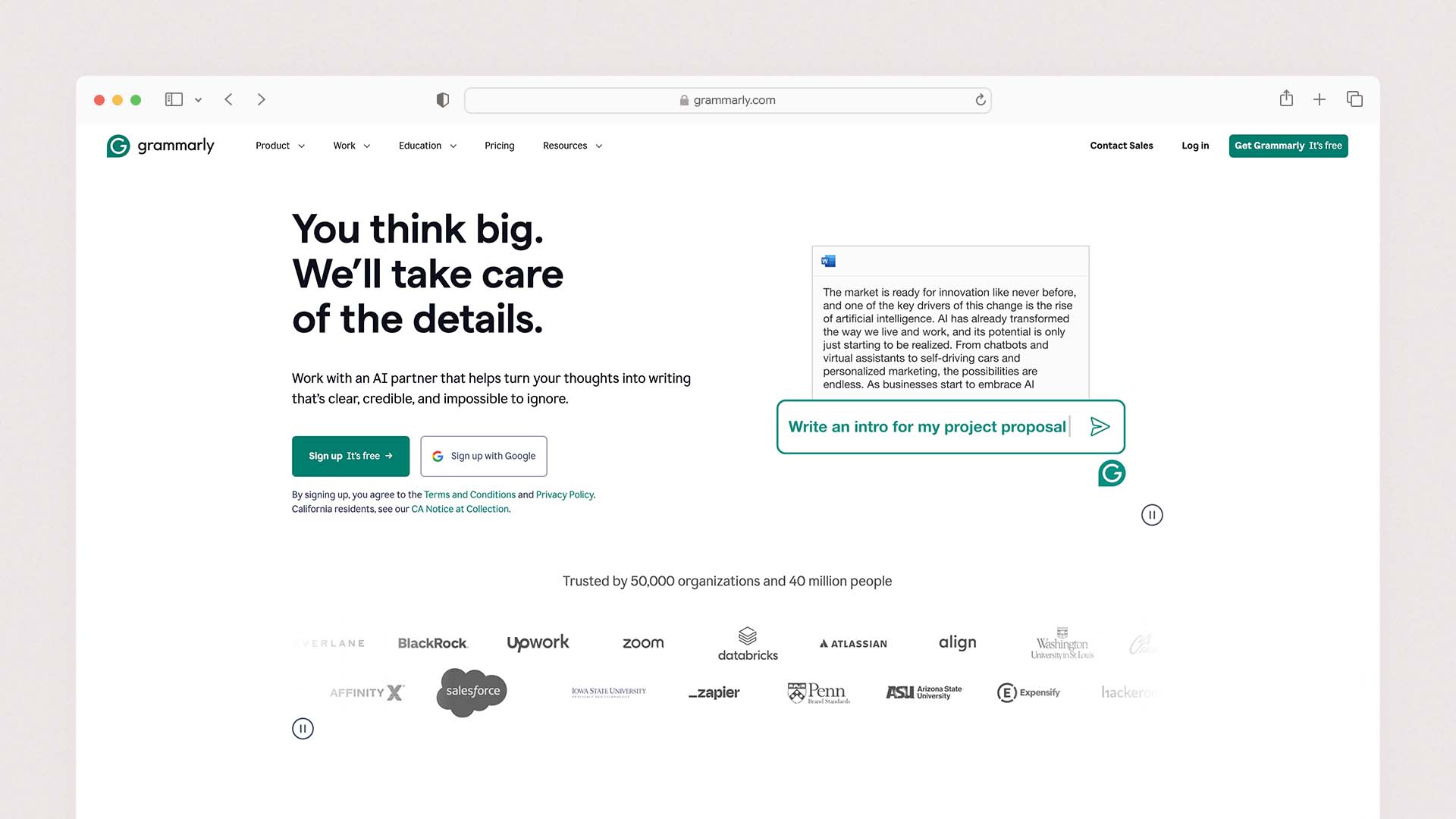
Grammarly occupies a fundamentally different category from every other tool on this list: it does not generate content. It improves content you have already written. For writers who produce their own first drafts — with or without AI assistance — and want a tool that catches errors, improves clarity, adjusts tone, and flags passive voice and weak word choices, Grammarly is the most sophisticated editing layer available.
GrammarlyGO is the generative AI feature that brings Grammarly closer to the other tools on this list — it can generate short text blocks, suggest completions, rewrite selected paragraphs, and draft replies to emails. But generation is a secondary function. Grammarly's primary value is editing intelligence, and it is the best in the market at that specific task.
The tone detector identifies whether your current draft reads as confident, diplomatic, friendly, formal, or several other tonal qualities — and suggests adjustments when your intended tone does not match what you have written. The goals feature lets you specify your audience, formality level, intent, and domain, and tailors suggestions accordingly. For business writing — client emails, proposals, reports — these contextual editing features produce meaningfully better output than a standalone spell checker.
Grammarly Business adds a team style guide where you define your organisation's preferred vocabulary, banned words, and writing conventions — every team member's Grammarly installation enforces those guidelines automatically, flagging deviations in real time.
Grammarly Pricing:
Plan | Monthly Price | Key Feature |
|---|---|---|
Free | $0 | Basic grammar and spelling, 100 GrammarlyGO prompts |
Premium | $12/month (annual) | Full suggestions, tone detector, GrammarlyGO unlimited |
Business | $15/user/month | Team style guide, admin panel, SAML SSO |
Grammarly Pros:
Best AI editing tool available — catches errors and improves clarity that grammar checkers miss
Tone detector and goals system for context-appropriate writing suggestions
Works across every platform — Gmail, Google Docs, Microsoft Office, Notion, Slack, browser
Business plan enforces team style guidelines company-wide
The most universally recommended writing tool for professionals at any price point
Grammarly Cons:
Not an AI writer — generates very little content, primarily improves existing writing
Premium price increase in 2025 reduced value for budget-conscious solo users
Some suggestions feel pedantic — the full suggestion volume can be overwhelming to manage
GrammarlyGO generation quality trails dedicated writing tools for substantive content
8. Wordtune — Best for Rewriting and Improving Existing Content
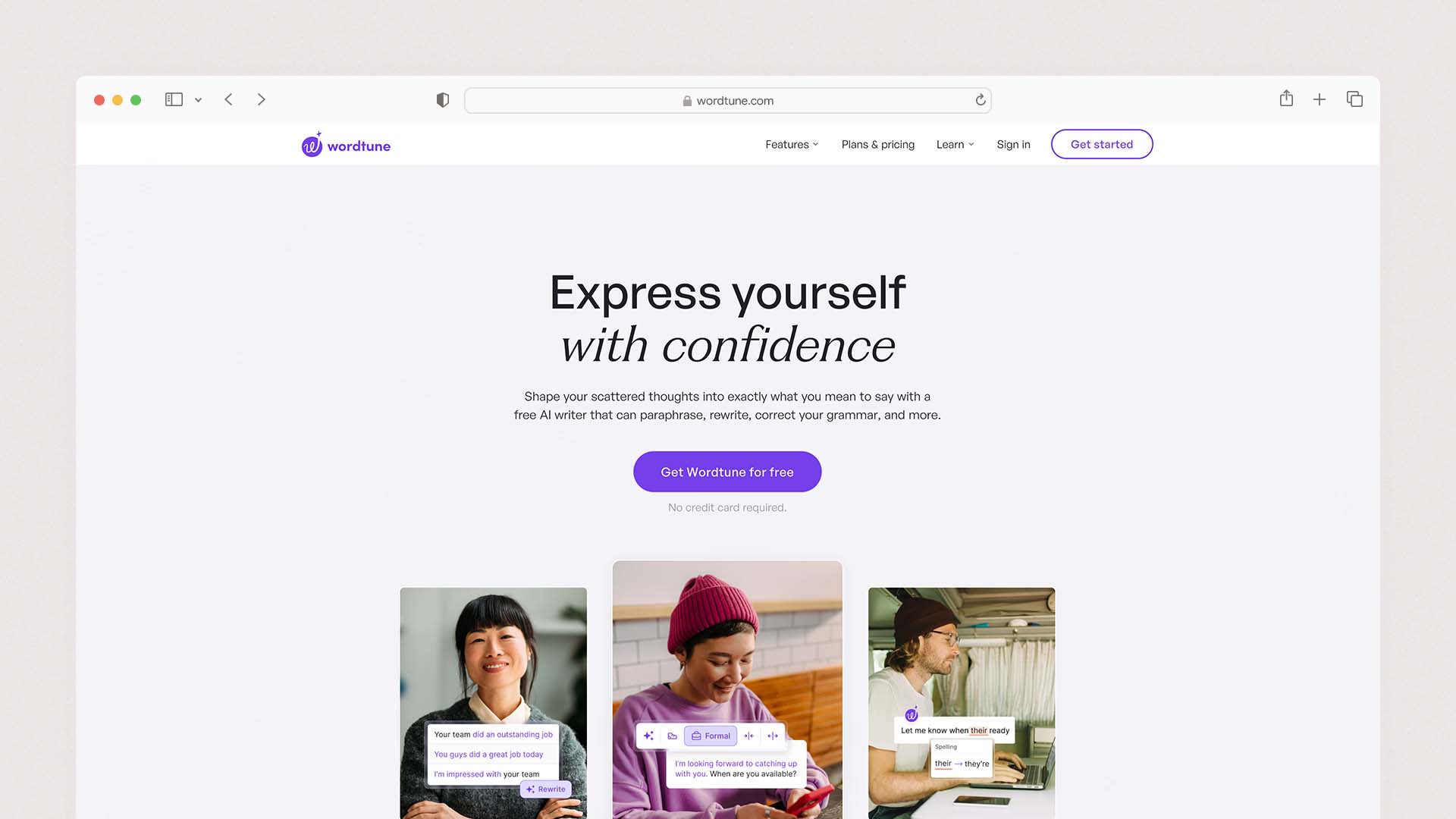
Wordtune is the best tool on this list for a specific and underserved use case: you have a draft — your own writing, a translated piece, a technical document that needs simplifying — and you want AI to rewrite it in better English without changing the meaning. Where other tools generate from prompts, Wordtune transforms existing text.
The rewrite, rephrase, and shorten functions take a selected sentence or paragraph and offer multiple alternative versions at different levels of formality and different structural approaches. The expand function adds supporting detail or examples to a brief statement. The tone changer shifts a piece between casual and formal registers while preserving the underlying content.
For non-native English writers producing business content, the Smart Paste feature — which intelligently reformats pasted text from any source into natural, fluent English — is one of the most practically valuable AI writing features available at any price.
Wordtune Pricing:
Plan | Monthly Price | Key Feature |
|---|---|---|
Free | $0 | 10 rewrites per day, basic suggestions |
Plus | $7/month (annual) | Unlimited rewrites, summarise, AI suggestions |
Unlimited | $14.99/month | All features, unlimited everything |
Business | Custom | Team management, API, custom integrations |
Wordtune Pros:
The best tool for improving existing writing rather than generating new content
Smart Paste reformats pasted text from any source into fluent English
Useful for non-native English writers producing business content
Lowest friction for basic use — browser extension works anywhere you write online
Affordable at $7/month for the core use case
Wordtune Cons:
Not a content generator — cannot write from a blank page or a topic prompt
Generation quality for longer pieces trails every other tool on this list
Less suitable as a standalone writing tool for content creators
The Prompt Test Results — What Each Tool Actually Produced
Here is the honest summary of how each tool performed across our three test prompts, rated on a five-point scale:
Tool | LinkedIn Post | Product Description | Blog Opening | Overall First Draft Quality |
|---|---|---|---|---|
Claude Pro | ★★★★★ | ★★★★☆ | ★★★★★ | Best for nuanced, thoughtful content |
ChatGPT Plus | ★★★★★ | ★★★★★ | ★★★★★ | Best all-round first drafts |
Jasper | ★★★★☆ | ★★★★☆ | ★★★★☆ | Most polished, most brand-consistent |
Writesonic | ★★★☆☆ | ★★★★☆ | ★★★★☆ | Best SEO structure in drafts |
Copy.ai | ★★★★☆ | ★★★☆☆ | ★★★☆☆ | Best for template-driven formats |
Rytr | ★★★☆☆ | ★★★☆☆ | ★★☆☆☆ | Best for quick short-form drafts |
Grammarly | N/A (editing only) | N/A | N/A | Best for improving existing drafts |
Wordtune | N/A (rewriting only) | N/A | N/A | Best for rewriting existing content |
The clear finding: ChatGPT Plus and Claude Pro produce the best first drafts at the lowest price. Jasper produces the most polished brand-consistent output for marketing teams. Writesonic produces the most SEO-optimised structure. Rytr produces adequate but generic short-form content at the lowest cost.
Which AI Writing Tool Should You Train On Your Brand Voice?
This is the most important question for any business that produces regular content — and it is the question most comparison articles never answer directly.
The honest answer by tool:
Jasper has the most sophisticated brand voice training. You feed it existing content samples, and it analyses your vocabulary, sentence length, tone, and structural patterns to build a replicable voice profile. For a marketing team producing 20+ pieces per month, this is the only tool where brand voice training delivers consistent, automatic results.
Claude Pro uses the Projects feature — you store your brand guidelines, sample content, and style notes in a Project, and every conversation in that Project starts with that context loaded. Manual but highly accurate, particularly for nuanced voices that resist simple tonal categorisation.
ChatGPT Plus uses Custom Instructions or Custom GPTs — a persistent system prompt that applies to all generations. Effective, but requires thoughtful setup and occasional maintenance as your brand evolves.
Copy.ai and Writesonic both have brand voice features, but independent user reviews consistently note that the difference in output is less pronounced than the marketing suggests — both require manual prompt adjustment to achieve genuinely distinct brand voices on complex content.
Rytr offers 20+ tone presets — useful for broad tonal direction (formal, casual, persuasive) but not for capturing a specific brand's unique voice.
Does AI Writing Hurt Your Google Rankings?
This is the most frequently asked question about AI writing tools, and the answer in 2026 is clear and well-documented.
Google does not penalise content for being AI-generated. Google treats text created by an AI writer the same as text written by a person in search rankings. What matters is the quality and accuracy of the writing.
What Google does penalise is low-quality content — thin, generic, poorly structured, factually inaccurate, or obviously templated material that provides no genuine value to the reader. AI-generated content that is poorly prompted, unedited, and published without human review falls into this category — not because it is AI-generated, but because it is low quality.
AI content paired with human editing produces 2.4 times better SEO performance than pure AI content while using 68% less time than human-only production. The optimal workflow is AI-assisted drafting with human editing — not full replacement of human judgment, but full leverage of AI efficiency.
The specific practices that create Google ranking risk are: publishing mass AI content at high volume without editing; publishing content that contains hallucinated facts (incorrect statistics, misquoted sources, non-existent studies); and publishing content that is structurally identical across multiple posts — same sentence patterns, same section order, same generic phrasing — because these automation fingerprints are identifiable.
The Real Cost of AI Writing — What Most Teams Actually Spend
The per-tool headline pricing is only part of the picture. Most content professionals end up using two tools — a primary generator and a secondary editor or SEO tool. Here is what the most common multi-tool combinations actually cost per month:
Combination | Monthly Cost | Best For |
|---|---|---|
ChatGPT Plus + Grammarly Premium | $32/month | Best value all-round setup for solo creators |
Claude Pro + Grammarly Premium | $32/month | Best for long-form content writers |
Writesonic Individual + Grammarly Premium | $32/month | Best budget SEO content setup |
Jasper Pro + SurferSEO | $159/month | Marketing teams needing brand governance + SEO |
Rytr Unlimited + Wordtune Plus | $14.50/month | Lowest cost dual-tool setup for short-form content |
The most frequently recommended combination among professional content creators: ChatGPT Plus ($20) + Grammarly Premium ($12) = $32/month. This pairing gives you the best available AI generation quality paired with professional-grade editing assistance — at less than the cost of Jasper alone.
Final Verdict
The AI writing tool market in 2026 offers something genuinely different for every use case and budget — and the right choice depends on a few honest answers about how you work.
Choose ChatGPT Plus if you want the best all-round writing quality at the lowest price, and you are comfortable developing prompting skills — this covers 90% of writing use cases for solo creators and small businesses
Choose Claude Pro if you write long-form, analytical, or nuanced content where depth and coherence across thousands of words matters more than speed
Choose Jasper if you run a marketing team of five or more that needs automatic brand governance, multi-channel campaign generation, and consistent output across multiple writers
Choose Copy.ai if you are a GTM or sales team that needs marketing automation workflows connecting your CRM, content calendar, and distribution channels
Choose Writesonic Standard if SEO content is your primary output and you want built-in keyword research plus the only AI search visibility monitoring in the category
Choose Rytr if you need unlimited short-form content generation at the lowest possible monthly cost
Choose Grammarly Premium to make everything else on this list better — pair it with whichever generator you choose
Choose Wordtune if you need to improve and rewrite existing text rather than generate new content
The most important thing to understand in 2026 is that AI writing tools are productivity multipliers, not replacement writers. The best content still requires human judgment — for accuracy, for genuine insight, for the specific perspective that only your experience provides. AI gets you to a strong draft faster. You make it good.
FAQs
What is the best AI writing tool?
For solo creators and small teams, generally no. Every dedicated writing tool uses the same underlying models as ChatGPT and Claude. The premium you pay buys templates, workflows, brand governance, and integrations — not better raw writing quality. For teams of five or more producing 20+ pieces of branded content monthly, Jasper's brand governance and workflow features justify the premium. For individuals, developing good prompting skills on ChatGPT Plus or Claude Pro delivers equivalent or better output for a third of the cost.
Are dedicated AI writing tools worth the premium over ChatGPT?
For solo creators and small teams, generally no. Every dedicated writing tool uses the same underlying models as ChatGPT and Claude. The premium you pay buys templates, workflows, brand governance, and integrations — not better raw writing quality. For teams of five or more producing 20+ pieces of branded content monthly, Jasper's brand governance and workflow features justify the premium. For individuals, developing good prompting skills on ChatGPT Plus or Claude Pro delivers equivalent or better output for a third of the cost.
Which AI writing tool is best for SEO content?
Writesonic Standard ($99/month) is the most complete SEO writing tool — it includes built-in Ahrefs keyword data, an SEO content grader that scores your draft against top-ranking competitors, and the only AI search visibility tracking that monitors how your content appears in Google AI Overviews, ChatGPT, and Perplexity. For teams that want SEO integration without the $99 price point, pairing ChatGPT Plus ($20) with a separate Ahrefs or Surfer SEO subscription achieves comparable SEO capability at a lower total cost.
Which AI tool can be trained on my brand voice?
Jasper has the most sophisticated brand voice training — it analyses samples of your existing content to build a replicable voice profile that applies automatically. Claude Pro's Projects feature stores brand guidelines and style samples in a persistent context. ChatGPT Plus uses Custom Instructions or Custom GPTs for brand voice persistence. Dedicated brand voice features in Copy.ai and Writesonic are less consistent in practice than marketing suggests, according to independent user reviews.
Does AI writing hurt Google rankings?
No — Google does not penalise content for being AI-generated. What Google penalises is low-quality content: generic, unedited, thin, or factually inaccurate material regardless of how it was produced. AI-generated content reviewed and edited by a human consistently performs well in search results. The highest risk practice is publishing high-volume, unedited AI content with automation fingerprints — identical structure, generic phrasing, and hallucinated facts.
What is the cheapest AI writing tool?
Rytr Unlimited at $7.50 per month is the cheapest dedicated AI writing tool for unlimited generation. Wordtune Plus at $7 per month is the cheapest AI writing enhancement tool. For the most capable AI writing at the lowest price — including long-form quality, brand voice control, and versatility — ChatGPT Plus and Claude Pro at $20 per month are the best value options available.
Latest Blogs
Get the Latest Tech Insights in Your Inbox.
No spam, unsubscribe anytime.